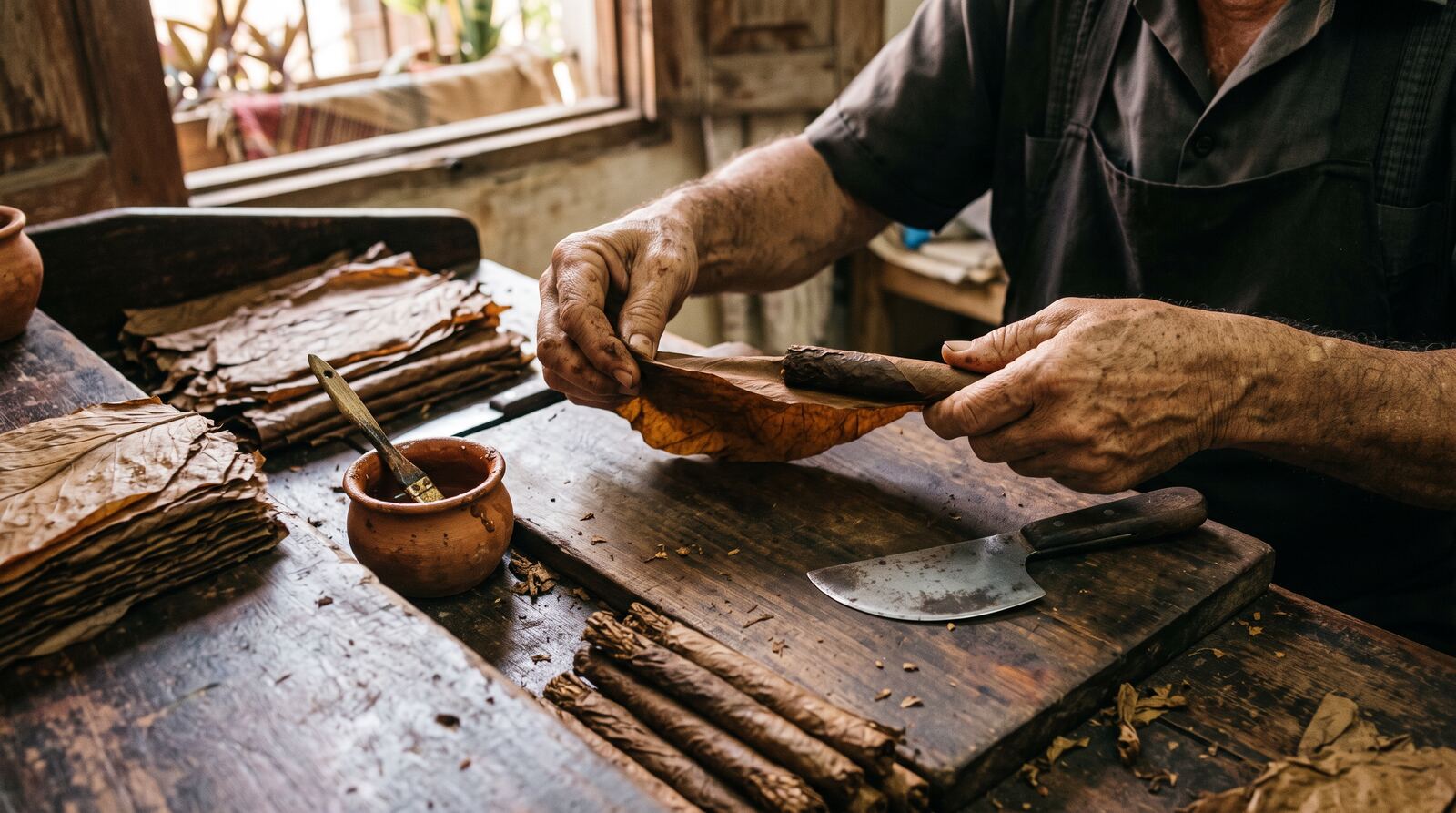
Understanding how cigars are made changes how you smoke them. A premium handmade cigar passes through dozens of pairs of hands: farmers who grow and harvest leaf by leaf, curers and fermentation masters who manage temperature and time, sorters who grade every wrapper by color and texture, and the bunchers and rollers who shape it all into a cigar that burns evenly and draws well.
This site is an independent, educational guide to that process. We do not make or sell cigars, and we are not owned by any manufacturer or retailer. Some pages contain labeled affiliate links.
The Cigar-Making Process at a Glance
| Stage | What happens | Typical time |
|---|---|---|
| 1. Growing | Seedlings are transplanted to fields; wrapper is often shade-grown under cloth | About 3–4 months in the field |
| 2. Harvesting | Leaves are picked in stages from the bottom of the plant up (priming) | Several weeks |
| 3. Curing | Leaves hang in barns and dry from green to brown | About 4–8 weeks |
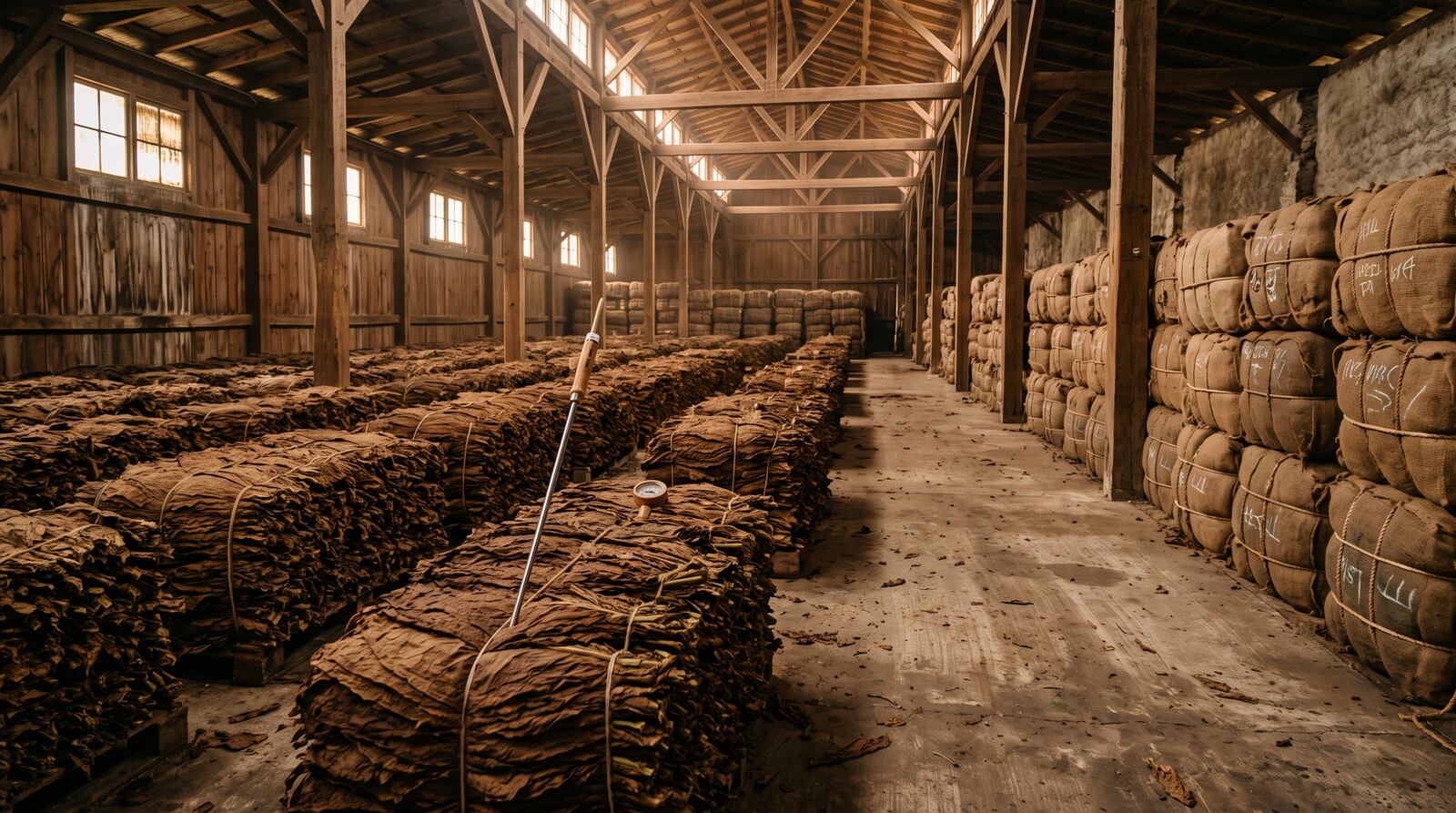
| 4. Fermentation | Cured leaf is stacked in large piles (pilones) that heat naturally | Weeks to many months |
| 5. Sorting & aging leaf | Leaves are graded, deveined and rested in bales | Months to years |
| 6. Bunching & rolling | Filler and binder are bunched, pressed in molds, then wrapped | Minutes per cigar |
| 7. Aging cigars | Finished cigars rest in cedar-lined aging rooms | Weeks to months or more |
| 8. Quality control & packing | Cigars are checked for draw, color-sorted, banded and boxed | Days |
Why Handmade Matters
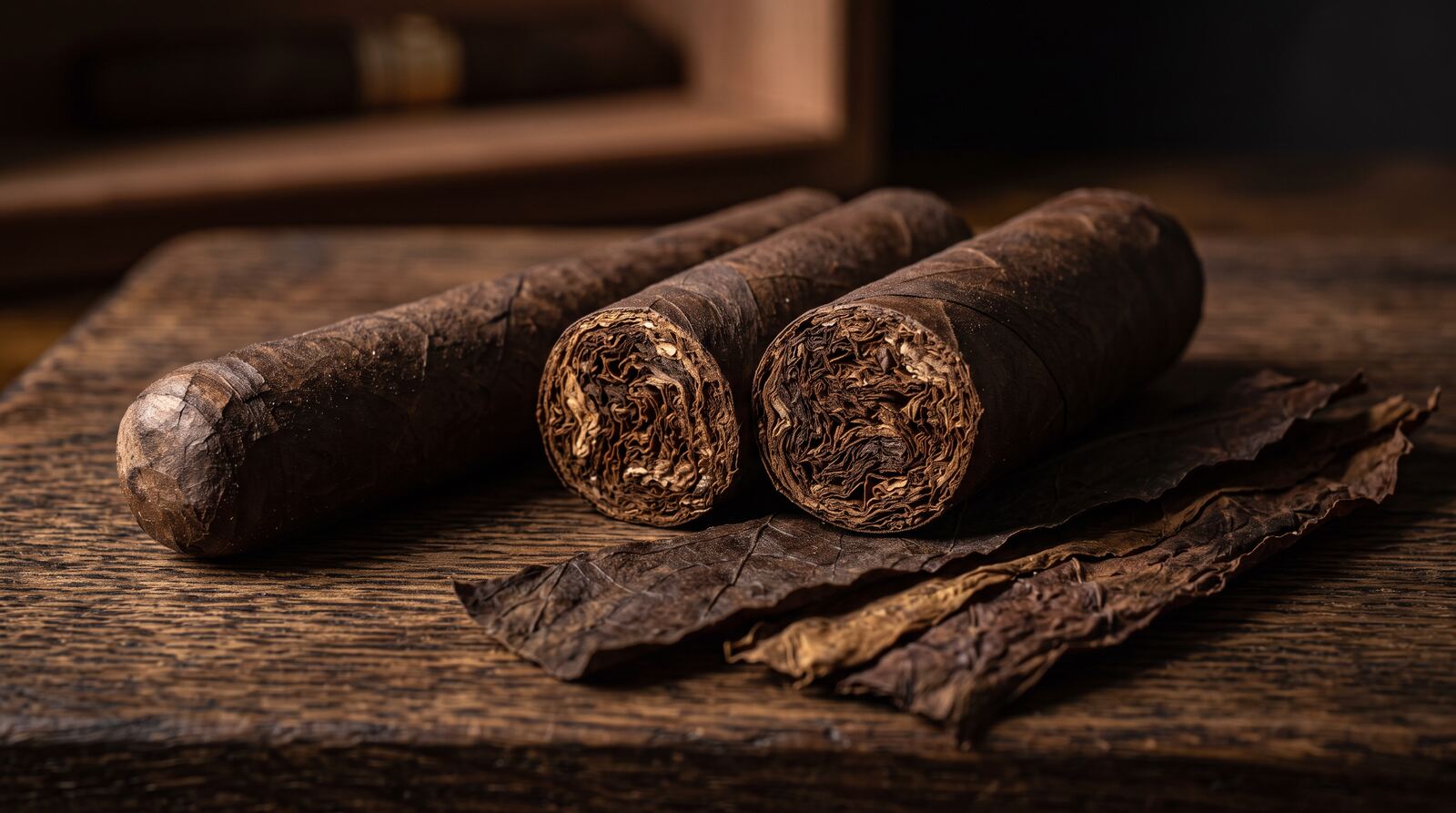
Machine-made cigars typically use short, chopped filler and can use a wrapper made from processed tobacco sheet. A premium handmade cigar uses long filler — whole leaves that run the length of the cigar — wrapped in a single natural wrapper leaf. That construction gives a cooler, slower burn and lets the flavors of different leaves blend and change as you smoke. Learn more in our guide to the parts of a cigar.
Where Cigars Are Made
Most premium cigars are rolled in a handful of countries: the Dominican Republic, Nicaragua, Honduras and Cuba, with others in Mexico, Costa Rica, Ecuador and elsewhere. Wrapper leaf travels even further — from Connecticut, Ecuador, Cameroon, Indonesia, Brazil and Mexico's San Andrés valley. See our sister guides to Danlí, Honduras and Dominican cigars.
The Wrapper: Most of the First Impression
The wrapper is the most expensive leaf in a cigar and contributes much of its look, aroma and first impression. Its color ranges from pale green candela to near-black oscuro. Our cigar wrapper types guide explains every major variety with a color chart.
Part of a Larger Map
Cigar Manufacture is one of the guides in the Cigars North America network, a collection of independent guides to the world's cigar regions.
Where to buy (affiliate link): Want to see these steps in finished cigars? Compare styles with a cigar sampler, and keep them in condition with a humidor from Famous Smoke Shop. Famous Smoke Shop is a licensed U.S. retailer that requires customers to be 21 or older. If you buy through this link we may earn a commission at no extra cost to you. Affiliate disclosure.
Frequently Asked Questions
How are cigars made?
Cigars are made by growing and curing tobacco, fermenting the leaves, then bunching filler and binder by hand, pressing them in molds, applying a wrapper leaf and aging the finished cigars.
How long does it take to make a cigar?
From seed to finished premium cigar, the process commonly takes two years or more, mostly spent curing, fermenting and aging the tobacco.
What is the difference between handmade and machine-made cigars?
Handmade premium cigars use whole long-filler leaves and a natural wrapper, while machine-made cigars typically use chopped short filler and may use a processed tobacco wrapper.
Where are most premium cigars made?
Most premium cigars are made in the Dominican Republic, Nicaragua, Honduras and Cuba.
What are the three main parts of a cigar?
The three tobacco components of a cigar are the wrapper, the binder and the filler.